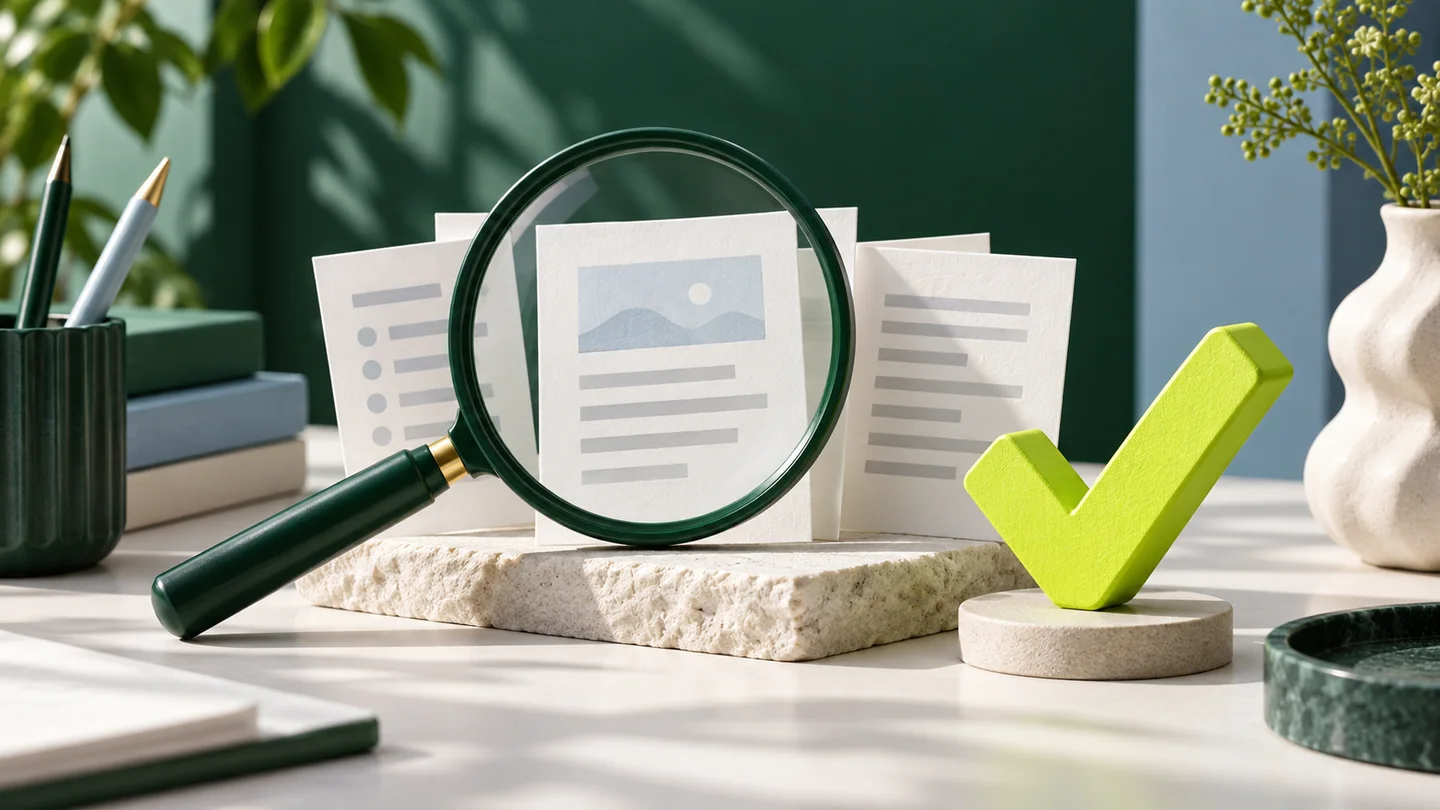
An answer with neat paragraphs and confident wording can feel finished. Before you copy it into a document, though, give yourself a checking step. This third article in our beginner series shows how to make that step manageable.
Know what can go wrong
NIST describes confabulation as the production of confidently stated but incorrect or false content. You may also hear it called a hallucination. A model can supply an invented reference or inaccurate detail in the same fluent style as a correct statement.
Source: NIST’s Generative AI Profile, section on confabulation
Separate the answer into checkable pieces
Imagine you asked for help planning a fictional workshop. The response might contain a suggested agenda, a claim about learning, and a statement about venue opening hours. These need different treatment: an agenda is a proposal to assess, while a factual claim needs evidence.
- Facts: names, dates, numbers, quotations, and claims about the world.
- Suggestions: proposed wording, options, or possible next steps.
- Assumptions: details the answer relies on that you did not provide.
Mark the claims that matter to your intended use. You can discard an irrelevant sentence instead of researching it. Spend your checking effort on information that would change a decision or mislead a reader.
Follow the claim to its source
- Open the source yourself. Check that the page or publication exists.
- Locate the specific passage, table, or evidence behind the claim.
- Read enough surrounding text to understand its limits and context.
- Check the date and whether the source applies to your situation.
- Correct, qualify, or remove the claim if the evidence does not support it.
For a timetable, use the organisation’s own timetable. For a product feature, check the provider’s documentation. For a research claim, look for the original study and notice who or what was studied. A search result headline alone rarely supplies enough context.
Practise on a source you can see
Compare the response with all three notes. Did the time change? Was a price added? Does the answer imply registration is open, even though the notes never said that? This small exercise makes checking specific rather than relying on a vague feeling of trust.
A second AI answer is not a final verdict
You can ask an AI tool to highlight weak claims, but still check the evidence independently. Asking the same question again is not a substitute for finding a source. If you cannot verify something important, leave it out or make the uncertainty clear.